
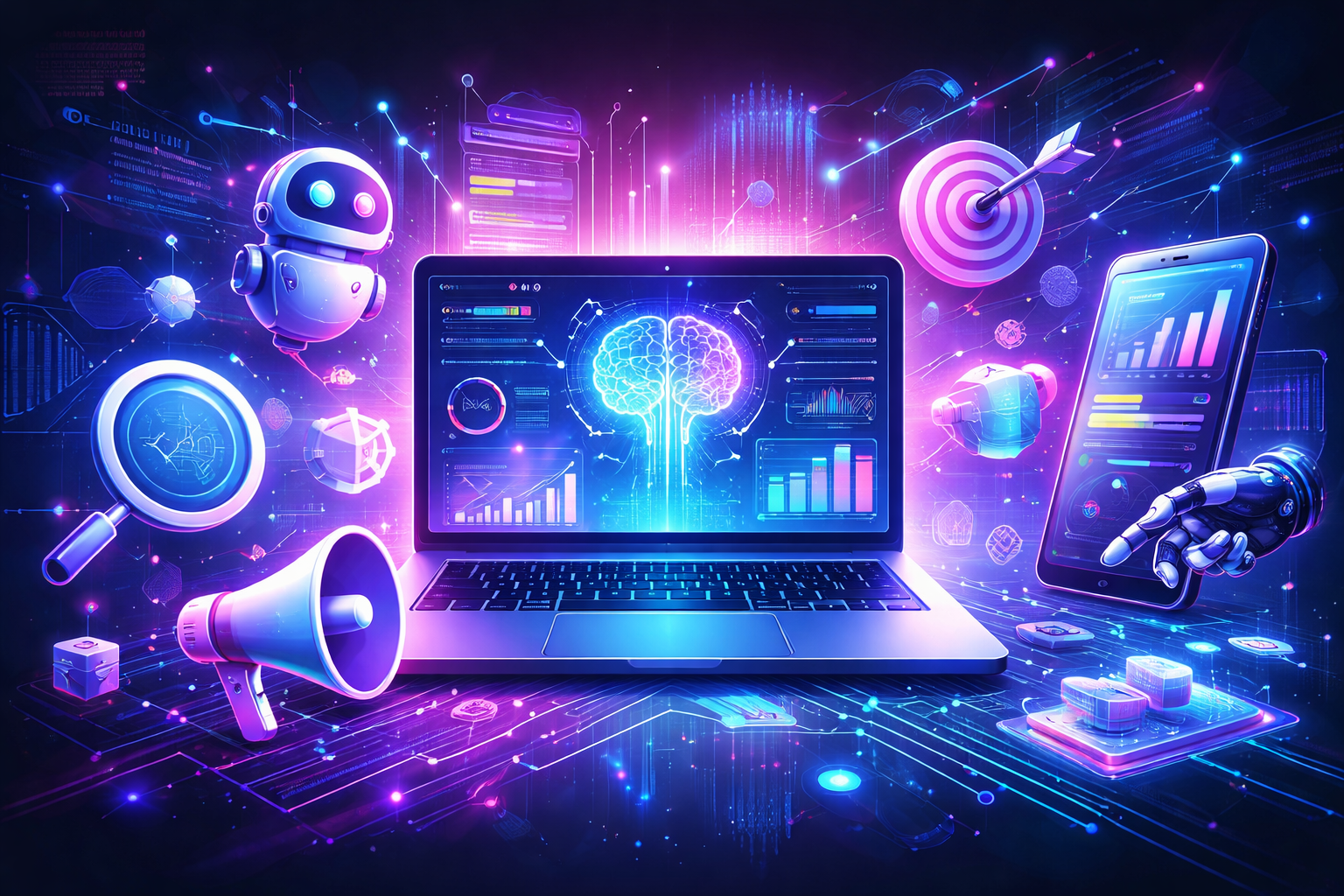
AI is no longer an experimental add on in marketing
It is quickly becoming the foundation of how modern marketing technology operates. As we move into 2026, AI is shaping not just how content is created, but how campaigns are planned, executed, and optimised at scale.
Below are the top five AI trends shaping marketing technology in 2026, and what they mean for businesses looking to stay competitive.
1. AI-Driven Content Creation at Scale
One of the most visible AI trends is the evolution of AI-powered content creation.
In 2026, AI tools are no longer limited to simple text generation. They now assist with:
-
Writing blog articles and social captions
-
Generating ad copy variations
-
Creating image and video prompts
-
Repurposing long-form content into short-form posts
The key shift is scale without loss of consistency. Brands can maintain a steady flow of on-brand content across multiple platforms without increasing their workload.
For marketers and estate agents, this means more visibility, more touchpoints, and less time spent manually writing posts.
2. Predictive Marketing and Smarter Decision-Making
AI is increasingly being used to predict outcomes rather than simply report past performance.
Marketing technology in 2026 is leveraging AI to:
-
Forecast campaign performance
-
Predict engagement and conversion likelihood
-
Recommend optimal posting times
-
Identify high-value audience segments
Instead of guessing what might work, marketers can make data-driven decisions before launching campaigns, reducing wasted budget and effort.
This shift from reactive to predictive marketing is one of the most powerful changes AI brings to the industry.
3. Hyper-Personalisation Across Channels
Personalisation has moved far beyond using a first name in an email.
AI now enables:
-
Dynamic messaging based on behaviour
-
Personalised content journeys
-
Platform-specific messaging at scale
-
Smarter segmentation and targeting
In 2026, marketing technology uses AI to ensure that the right message reaches the right person at the right time — automatically.
For businesses, this creates stronger engagement, higher trust, and improved conversion rates without manual intervention.
4. End-to-End Marketing Automation
AI-driven automation is expanding beyond isolated tasks.
Modern marketing technology platforms are increasingly offering:
-
Automated content creation and scheduling
-
AI-assisted lead capture and qualification
-
Intelligent follow-ups and nurturing
-
Integrated analytics and performance insights
Rather than managing multiple disconnected tools, businesses are moving toward end-to-end AI-powered marketing systems that work seamlessly in the background.
This allows teams to focus on strategy and growth rather than repetitive operational tasks.
5. Human-AI Collaboration as the New Standard
One of the most important trends shaping marketing technology is the recognition that AI works best alongside human expertise.
In 2026, successful marketing teams use AI to:
-
Handle execution and optimisation
-
Reduce repetitive workloads
-
Support creative and strategic thinking
Human marketers remain responsible for:
-
Brand voice and messaging
-
Creative direction
-
Ethical decision-making
-
Relationship building
This balance ensures that marketing remains authentic while benefiting from the speed and intelligence AI provides.
What These Trends Mean for Businesses in 2026
The impact of these AI trends is clear: marketing is becoming faster, smarter, and more automated — but also more strategic.
Businesses that embrace AI-powered marketing technology can:
-
Stay consistent across channels
-
Improve engagement and performance
-
Scale marketing without burnout
-
Gain a competitive advantage
Those that delay adoption risk falling behind as competitors use AI to move faster and smarter.
AI Auto Poster and the Future of Marketing Technology
Tools like AI Auto Poster reflect where marketing technology is heading.
By combining:
-
AI-assisted content creation
-
Automated social media scheduling
-
Consistent posting systems
AI Auto Poster helps businesses adapt to these trends without complexity, making advanced AI-powered marketing accessible to everyday users.
Final Thoughts
The top AI trends shaping marketing technology in 2026 all point toward one thing: intelligent automation supported by human creativity.
Businesses that invest in AI-driven tools now will be better positioned to adapt, scale, and thrive in an increasingly competitive digital landscape.
The future of marketing is not just automated — it’s intelligently designed.
