Building an AI Tool Kit for Business Success
Artificial Intelligence is no longer a luxury reserved for large corporations. Today, businesses of all sizes are using AI to work smarter, automate repetitive tasks, and scale faster than ever before.
The key to success isn’t using one AI tool — it’s building a strategic AI tool kit that supports your business goals, marketing, operations, and growth.
In this article, we’ll explore how to build an effective AI tool kit for business success and how AI-driven tools are shaping the future of work.
What Is an AI Tool Kit?
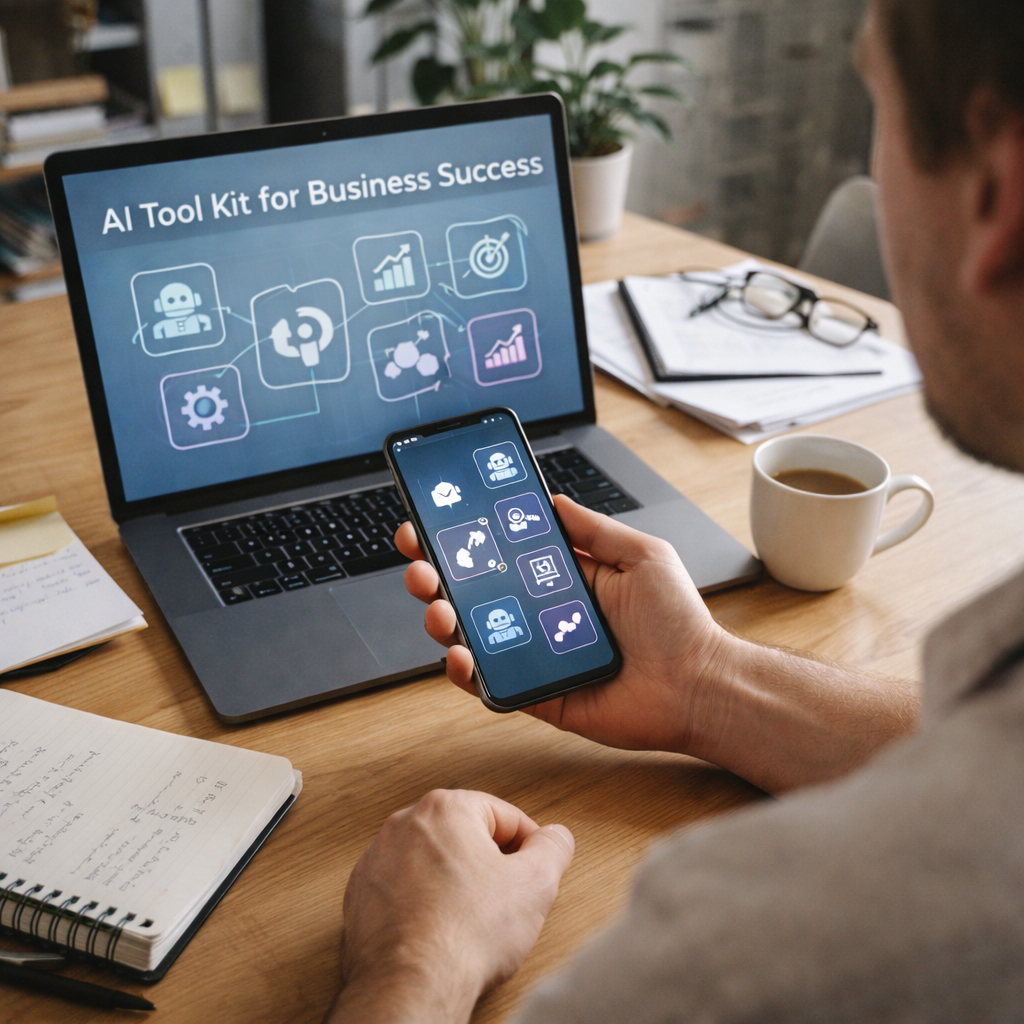
An AI tool kit is a collection of AI-powered tools that work together to support different areas of your business. Instead of relying on manual processes or disconnected systems, an AI tool kit helps streamline workflows, reduce friction, and improve consistency.
A well-built AI tool kit typically supports:
Marketing and content creation
Social media management
Lead generation and follow-up
Data analysis and decision-making
Productivity and automation
The goal is not complexity — it’s efficiency.
Why Every Business Needs an AI Tool Kit
As competition increases and customer expectations rise, businesses are under pressure to move faster without sacrificing quality.
An AI tool kit helps businesses:
Save time on repetitive tasks
Stay consistent across marketing channels
Make data-driven decisions
Scale without increasing workload
Maintain a competitive advantage
Rather than replacing human creativity, AI tools act as intelligent assistants that enhance productivity and performance.
Core Components of a Business AI Tool Kit
1. AI Content Creation Tools
Content remains at the heart of digital marketing, but creating it manually is time-consuming.
AI content tools help with:
Blog article drafts and outlines
Social media captions
Ad copy variations
Email subject lines
Content repurposing
These tools allow businesses to produce more content without burnout while maintaining a consistent brand voice.
2. AI-Powered Social Media Automation
Consistency is critical for online visibility, but daily posting is a major challenge for many businesses.
AI-powered social media tools can:
Generate post ideas and captions
Schedule posts automatically
Repurpose content across platforms
Maintain consistent posting frequency
Platforms like AI Auto Poster make it easier for businesses to stay visible without spending hours managing social media manually.
3. AI Tools for Lead Generation and Follow-Up
AI is increasingly used to improve how businesses attract and nurture leads.
These tools support:
Lead capture and qualification
Automated follow-up sequences
Personalised messaging
CRM integration
By automating the early stages of the customer journey, businesses can focus more time on high-value conversations and conversions.
4. AI Analytics and Decision-Making Tools
Data is only valuable when it’s understood and acted upon.
AI analytics tools help businesses:
Analyse customer behaviour
Track marketing performance
Identify trends and opportunities
Predict outcomes and results
This enables smarter decision-making and reduces guesswork across marketing and operations.
5. Workflow Automation and Productivity Tools
Beyond marketing, AI tools can automate internal processes that slow businesses down.
Common use cases include:
Task automation
Scheduling and reminders
Document processing
Customer support automation
These tools help teams work more efficiently while reducing human error.
How to Build Your AI Tool Kit Step by Step
Building an AI tool kit doesn’t require technical expertise or a large budget.
Step 1: Identify Bottlenecks
Start by identifying where your business loses the most time — content creation, posting, follow-ups, or reporting.
Step 2: Choose Tools That Integrate
Look for tools that work well together and reduce duplication.
Step 3: Start Small
Implement one or two tools first, then expand as your confidence grows.
Step 4: Optimise and Refine
Regularly review performance and adjust your tool kit based on results.
The Future of AI Tool Kits for Business
As AI continues to evolve, tool kits will become more connected, predictive, and intelligent.
Future AI tool kits will:
Offer end-to-end automation
Deliver deeper personalisation
Provide real-time insights
Integrate seamlessly across platforms
Businesses that adopt AI strategically now will be better positioned to scale and adapt in the years ahead.